Not sure where to start?
Try the Personal Concerns Inventory (PCI) to clarify what to focus on, or start with Relaxation Therapy for guided meditation.


When you walk into the world each day, are you alert and aware, or simply fearful? Do you have a plan if something goes wrong? Are you scared, or are you learning how to manage fear and take Focused Action?
Fear is not necessarily the enemy. Because we associate fear with danger, discomfort, and uncertainty, we naturally tend to view it as something negative. But fear can warn us of danger, sharpen our attention, and prepare us to act. The problem begins when fear controls our behavior instead of helping us respond effectively.
In the Mulry Method, learning to manage fear does not mean eliminating it. It means developing the skills to respond more effectively when fear and stress are present.
Early in his career, Dr. Mulry spent time with a world-famous athlete who had never lost in his sport. Let’s call him Joe. One night over dinner, Joe shared something surprising. Despite his confidence and extraordinary success, he said, “I fear getting married.”
Joe had learned to prepare, focus, and perform under enormous competitive pressure, yet fear was still present in another part of his life. His success was not evidence that he had eliminated fear. It showed that he had learned how to perform when fear and emotional arousal were present.
That distinction is important.
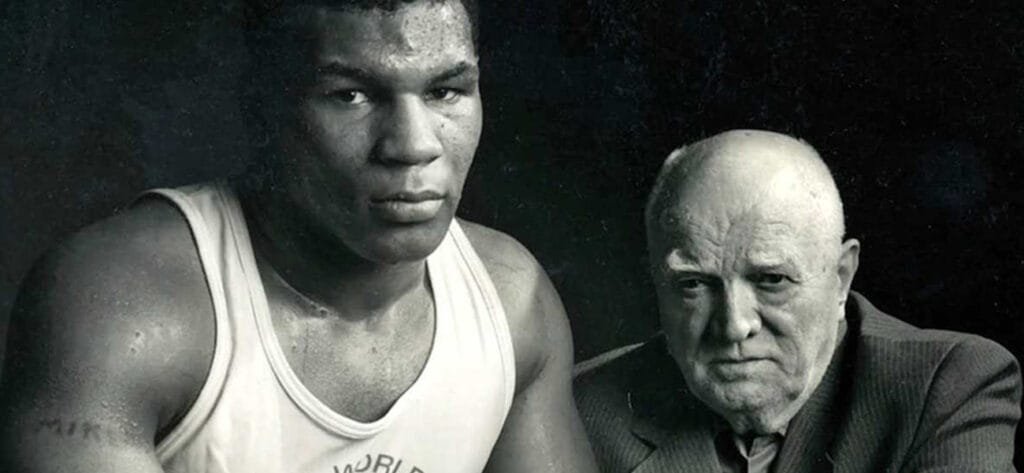
Cus D’Amato, the legendary trainer who helped develop Mike Tyson, believed that fear was not something a fighter could—or should—eliminate. The challenge was learning how to understand and use it.
The same physical activation that causes one person to freeze can help another become intensely focused and prepared to act.
The difference is not simply the presence or absence of fear. Preparation, experience, expectations, and learned skills influence what we do with it.
This principle extends far beyond sports.
A difficult conversation, presentation, job interview, relationship decision, or major life change can produce many of the same sensations associated with competitive pressure.
The question becomes: What have you learned to do when those sensations appear?
When the brain detects possible danger, the body can rapidly prepare for action. Heart rate may increase, breathing may become faster, muscles may tighten, and attention may narrow.
These responses can help us react quickly when genuine danger exists.
But our nervous system does not respond only to immediate physical threats. Uncertainty, memories, expectations, social situations, and anticipated consequences can also influence how safe or threatened we feel.
This is one reason the connection between psychology and physiology matters.
Polyvagal Theory provides one framework for considering how the nervous system responds to cues associated with safety and threat. The concept of neuroception describes how the nervous system may evaluate those cues outside conscious awareness.
At the same time, what we have learned from previous experiences influences what we consciously expect to happen.
These two processes can interact.
Some fears appear very early in human development, while many others develop through experience, observation, instruction, and association. We can learn to fear situations because something unpleasant happened to us. We can also learn by watching how other people react or by repeatedly hearing that something is dangerous.
Once we learn to fear something, that fear can influence how we react when we face it again. And because some fear responses are learned, experience and practice can also change how we respond.
Julian Rotter’s Social Learning Theory helps explain why two people can face similar situations and respond very differently. One of Rotter’s central concepts is expectancy, which refers to what we have learned to anticipate as a likely consequence of our behavior in a particular situation.
If past experiences have taught you that speaking in front of people leads to embarrassment, you may approach a presentation expecting something to go wrong. If training and successful experiences gradually teach you that you can prepare and perform effectively, your expectations may begin to change.
This means that fear is not simply something happening to us. Our learning history can influence how we interpret situations and what we expect from our own actions.
These two processes describe different aspects of how we anticipate what may happen. Expectancy asks: Based on what I have learned, what do I think will happen? Neuroception asks: What is my nervous system detecting as safe, dangerous, or threatening before I consciously evaluate it?
Sometimes the two align. Sometimes they do not. You may consciously know that a situation is safe while your body remains tense and defensive. In another situation, you may underestimate a genuine risk because previous experience has taught you to feel comfortable with it.
Understanding this interaction is one reason the Mulry Method brings psychological learning together with practical mind-body skills. Expectancy And Neuroception: Connecting Social Learning And Polyvagal Theory explores this relationship in greater detail.
Imagine stepping into a boxing ring without ever learning how to box. Fear would be appropriate. Now imagine spending years learning footwork, defense, breathing, balance, timing, and strategy. The danger has not disappeared. What has changed is your ability to respond to it.
The same principle applies to everyday life. Education helps us understand a problem. Practice develops capability. Experience provides new information. Relaxation and awareness help us recognize what is happening in our bodies. Focus helps us decide what to do next.
Preparation does not guarantee an outcome. It increases our ability to respond effectively.
Julian Rotter’s concept of Internal Locus of Control brings attention back to what we can influence. Fear often directs our attention toward everything that might go wrong.
You cannot control every danger, other people’s behavior, unexpected events, or the outcome of every decision. But you can influence how well you prepare, what skills you develop, where you place your attention, and what actions you take.
The question becomes:
What can I do now?
The Mulry 5-Step Method for Internal Locus of Control puts this principle into practice by moving from concern to Focused Action.
Knowing intellectually that you should not be afraid is often not enough. Fear affects the body as well as the way we think, which is why preparation involves more than simply telling yourself to stay calm.
Dr. Mulry identified four core In The Zone Peak Performance Skills: Relaxed Moves, Power Moves, Elastic Moves, and Focused Moves. Together, these skills develop relaxation, balance, flexibility, and focus through physical and mental experience.
In The Zone Skills Training puts these skills into practice so they are more readily available when stress is high. You don’t wait until you are under pressure to begin preparing for pressure.
Fear can create unnecessary muscular tension, changes in breathing, and increased arousal. Dr. Mulry developed Relaxation Therapy to teach relaxation as a learned skill through breathing, body awareness, and repeated practice.
The purpose is not to escape difficult situations or eliminate fear. It is to become more aware of tension and develop the ability to relax when you need to.
Being relaxed and being prepared are not opposites. A skilled performer can be both.
Fear is part of being human. The objective is not to construct a life in which you never experience uncertainty, anxiety, or emotional arousal. That would be neither realistic nor necessarily desirable. Instead, learn from fear.
Prepare for what you can. Develop useful skills. Learn to recognize your body’s responses. Examine what you have learned to expect. Focus your attention on what you can influence. Then act.
When you become Relaxed, Balanced, Flexible, and Focused, fear does not have to dictate what happens next. It can become part of the information you use to meet the moment effectively.
Fear can alert you. Preparation can strengthen you. Focused Action moves you forward.
