Not sure where to start?
Try the Personal Concerns Inventory (PCI) to clarify what to focus on, or start with Relaxation Therapy for guided meditation.

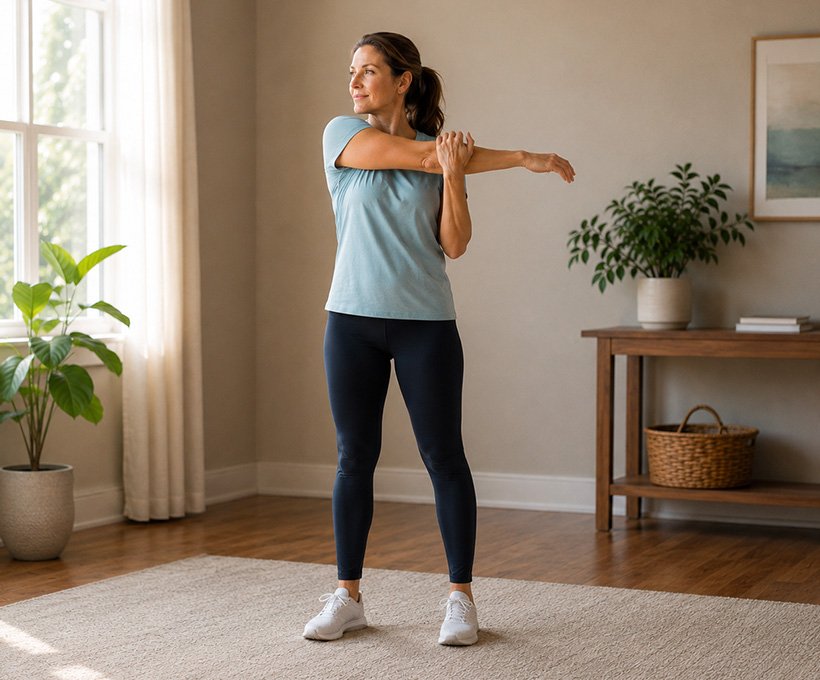
Elastic Moves is the third of the four core In The Zone Peak Performance Skills. It develops physical and mental flexibility, creating greater freedom of movement and readiness for action.
Dr. Mulry described flexibility as a state of readiness. Physical flexibility allows greater freedom of movement, while mental flexibility helps you adapt, relax preconceptions, and remain open to different possibilities.
Elastic Moves build on being Relaxed and Balanced by adding the physical and mental flexibility needed for readiness and effective action.
Physical flexibility allows your body to move freely through a greater range of motion.
Dr. Mulry emphasized that stretching should be comfortable and controlled rather than forced. The objective is to gradually extend your range of movement while remaining relaxed and aware of how your body feels.
Flexibility is not simply about how far you can stretch. It contributes to your readiness to move and respond effectively during everyday activities and performance.
Stretching provides a practical way to develop Elastic Moves.
Dr. Mulry encouraged slow, gradual stretching without bouncing or forcing the movement. Stretch only to the point of mild tension. If stretching causes pain, stop.
Elastic Moves also apply to the way you think.
Dr. Mulry emphasized the importance of relaxing preconceptions. Habitual ways of thinking can limit the alternatives we are able to see, just as physical stiffness can limit movement.
Mental flexibility means remaining open to different possibilities rather than becoming locked into a single idea or expectation. This adaptability helps you remain ready to adjust as circumstances change.
Dr. Mulry used Hard Eyes and Soft Eyes to demonstrate how attention can become narrow or broad.
With Hard Eyes, attention is directed toward a specific object or point. Your focus becomes narrow and concentrated.
With Soft Eyes, you relax your gaze and become more aware of the larger visual field, including peripheral vision and what is happening around you.
Neither way of seeing is always better. The skill is being able to shift between narrow and broad attention depending on what the situation requires.
Lesson 31: Focused Moves from In The Zone Skills Training includes a simple exercise that lets you clearly and directly experience the difference between Hard Eyes and Soft Eyes.
Flexibility is one of the four key elements Dr. Mulry identified for being In The Zone: Relaxed, Balanced, Flexible, and Focused.
Elastic Moves build on Relaxed Moves and Power Moves by adding physical and mental flexibility. Being relaxed, balanced, and flexible prepares you to adjust your movements and attention while remaining ready for action.
This provides the foundation for Focused Moves, where relaxation, balance, and flexibility come together with concentration and focus.
In In The Zone: Making Winning Moments Your Way of Life, Dr. Mulry emphasized physically experiencing the exercises rather than simply reading about them.
Practice stretching slowly and comfortably. Notice your range of movement. Experience Hard Eyes and Soft Eyes. Become aware of when your attention is narrow and when it is broad. Look for opportunities to become more flexible in both movement and thought.
Through doing, you learn what it feels like to become more Relaxed, Balanced, Flexible, and Focused.
See how Relaxed Moves, Power Moves, Elastic Moves, and Focused Moves work together in The Four In The Zone Peak Performance Skills.
In The Zone Skills Training is a 40-lesson video series combining Self-Learning, mind-body skills, and psychological principles to develop Self-Command, Focused Action, and Peak Performance.
Go straight to Lesson 27: Elastic Moves to further your understanding of Elastic Moves.
Or start from the beginning with the In The Zone Skills Training overview and continue through all 40 video lessons in order.
