Not sure where to start?
Try the Personal Concerns Inventory (PCI) to clarify what to focus on, or start with Relaxation Therapy for guided meditation.


Prescription drug abuse, largely for pain relief, has become a major public health problem in the United States.
The U.S. experienced a dramatic increase in prescription drug use and opioid prescribing over several decades. As the consequences became clear, greater attention turned toward other approaches to pain management, including methods that help people participate more actively in their own care.
Pain is a major driver for visits to physicians. It is also a major cause of disability and an important factor in quality of life and productivity. Pain relief remains a major reason for taking medications.
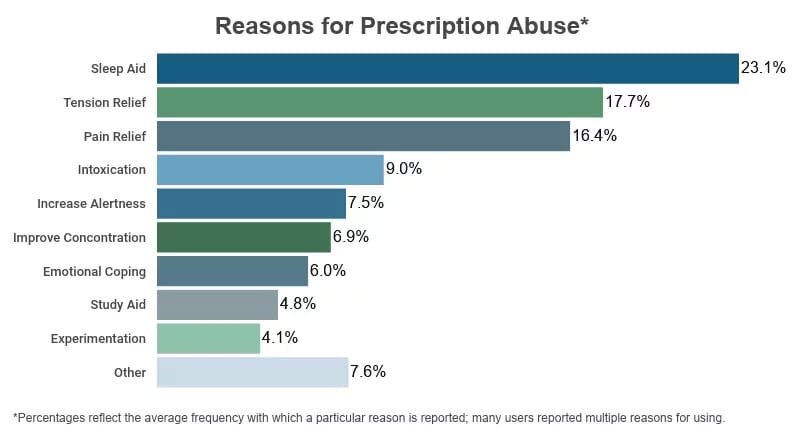
Pain relief is one reason for the misuse of prescription drugs, according to the National Center for Drug Abuse Statistics. Given the burden of pain in human lives, dollars, and social consequences, relieving pain should be a priority.
Because pain varies from person to person, pain care should be tailored to the individual and encourage self-management. Relaxation Therapy provides a practical skill people can learn and use as part of managing pain.
For Dr. Mulry, relaxation was something you could learn through practice. Relaxation Therapy uses rhythmic breathing, muscle relaxation, meditation, and natural sounds to help you become more aware of tension and the feeling of releasing it.
With repeated practice, you become more familiar with the contrast between tension and relaxation and develop the ability to relax when you need to, even without the guided recording.
Dr. Mulry’s work emphasized learning skills you could use for yourself. This principle continued throughout the Mulry Method.
His Backcare Programs taught practical skills for caring for your own back, including relaxation, breathing, correct movement, and the Position of Strength.
In The Zone Skills Training expanded these ideas through breathing, movement, relaxation, concentration, and other skills developed through practice.
The purpose of these programs was not simply to understand what to do. It was to practice, learn from your own experience, and develop skills you could use in everyday life. For Dr. Mulry, that same principle applied to managing pain: learn what you can do for yourself and put it into practice.
