Not sure where to start?
Try the Personal Concerns Inventory (PCI) to clarify what to focus on, or start with Relaxation Therapy for guided meditation.

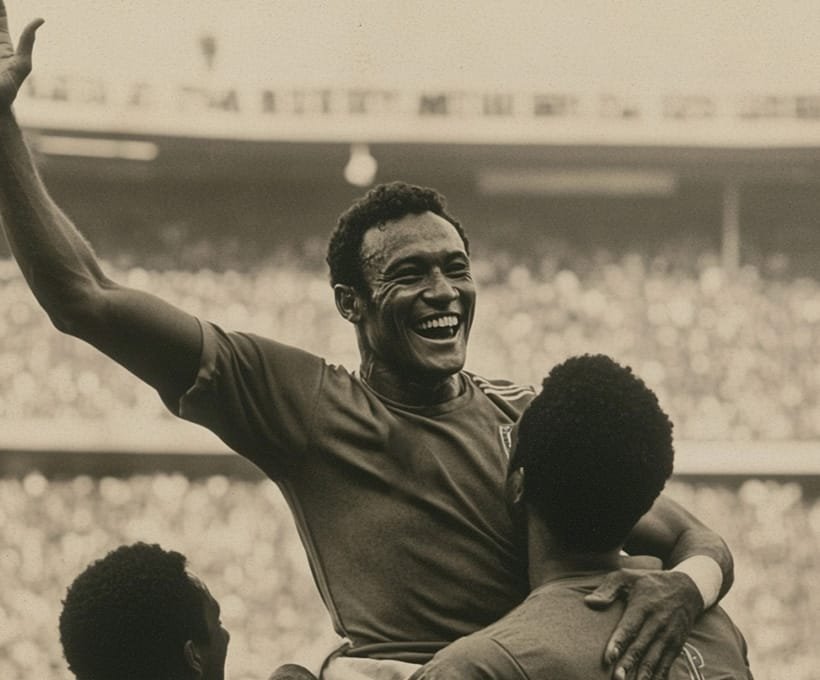
In The Zone Skills Training is Dr. Reaume Carroll Mulry’s approach to developing mind-body integration through movement, breathing, relaxation, psychology, and Self-Learning. Developed through decades of teaching and injury-prevention work, the training helps bring these elements together into what Dr. Mulry called a full-body attitude.
The approach is built around learning through doing. Through practice, Correct Moves can become habits that influence how you move and perform.
Dr. Mulry was teaching mind-body integration before the concept became widely accepted in Western workplaces.
During one corporate program, he proposed flexibility exercises for employees. When the company’s CEO learned about the program, he objected, saying, “We can’t allow Yoga on our premises.”
Once the CEO understood that Dr. Mulry was teaching a practical stretching and movement program, the company moved forward with the training.
The experience reflected a larger change Dr. Mulry observed over his career. Movement, breathing, relaxation, attention, and psychological readiness were increasingly being understood as interconnected rather than separate.
For Dr. Mulry, that connection was something to practice, not simply understand.
Dr. Mulry spent thousands of hours conducting on-site programs designed to address strains, sprains, back problems, and other common workplace injuries.
Through this work, he identified recurring qualities that distinguished effective movement from movement that created unnecessary strain.
These principles eventually became Relaxed Moves, Power Moves, Elastic Moves, and Focused Moves, the four core In The Zone Peak Performance Skills.
Dr. Mulry described these as four core In The Zone Peak Performance Skills.
Together, the Correct Moves provide a practical way to become more Relaxed, Balanced, Flexible, and Focused. Through practice, they can become habits, promoting mind-body integration with a full-body attitude.
One of Dr. Mulry’s central principles was:
Correct movement is exercise.
Exercise does not occur only during a workout. Every time you stand, walk, bend, lift, reach, carry, work, play, or perform, you are using patterns of movement.
Those patterns can reinforce efficient movement or unnecessary strain.
This is why Dr. Mulry viewed everyday activity as an opportunity for practice. The principles can apply while handling objects at work, chopping wood, playing a sport, dancing, performing ballet, practicing martial arts, or simply moving through daily life.
The activity changes. The fundamentals of effective movement remain.
Dr. Mulry often compared learning physical and psychological skills to martial arts.
A beginning martial artist does not start as a black belt. Learning begins with fundamental movements that are practiced repeatedly before more complex skills are introduced.
In The Zone Skills Training follows the same principle.
Relaxation, balance, flexibility, and focus develop progressively. Through practice, these skills build readiness for action, allowing physical and mental skills to work together when they are needed.
Trying to skip the fundamentals can make advanced performance harder. Building from a strong foundation creates the opportunity for greater coordination and fluency.
Mastery is not something you simply understand. It develops through experience.
Much of traditional education emphasizes listening, reading, discussing, and thinking. These can all contribute to learning, but Dr. Mulry believed they were not enough by themselves.
You can understand how a movement should be performed without being able to perform it effectively. You can understand relaxation without recognizing and releasing unnecessary tension in your own body.
The same distinction appears in sports, martial arts, music, dance, and other performance skills. Knowledge provides direction. Practice develops ability.
You learn through doing. This is why Focused Action became so important within Dr. Mulry’s work. The objective is not simply to know what to do, but to develop the ability to do it.
Self-Learning also involves becoming increasingly capable of evaluating your own understanding and performance.
Dr. Mulry expressed this through another principle:
Learn to Teach – Teach to Learn
Teaching a skill requires you to organize what you know, demonstrate it clearly, and recognize what you may not yet fully understand.
The process can expose gaps that remain hidden when you are simply listening or following instructions.
You learn through practice. You deepen that learning by becoming capable of explaining and demonstrating what you have learned.
Dr. Mulry’s psychological approach was strongly influenced by his mentor and friend Julian Rotter and his Social Learning Theory.
Rotter’s work provided a framework for understanding how Behavior Potential, Expectancy, Reward Value, and Psychological Situation interact. These ideas helped Dr. Mulry connect Self-Learning with the development of an Internal Locus of Control.
Modern nervous-system frameworks such as Polyvagal Theory provide another perspective for considering how physiological state can interact with attention, behavior, and readiness for action.
The Mulry Method brings these dimensions together through practice, connecting physical and mental skills in the development of Self-Command, Focused Action, and Peak Performance.
The purpose of In The Zone Skills Training is to put learning into action.
Through practice, Correct Moves can become habits, bringing relaxation, balance, flexibility, and focus together in mind-body integration with a full-body attitude.
Dr. Mulry emphasized that these skills are not limited to athletes or extraordinary performances. They can be applied across the physical, social, intellectual, and professional dimensions of life as part of Living In The Zone.
The complete 40-lesson program develops these skills progressively toward Self-Command, Focused Action, and Peak Performance.
