Not sure where to start?
Try the Personal Concerns Inventory (PCI) to clarify what to focus on, or start with Relaxation Therapy for guided meditation.

Many people have difficulty falling asleep because the brain continues working long after the body is ready for rest. Thoughts about unfinished tasks, tomorrow’s responsibilities, or the concerns of daily life can keep the mind active when all you want is sleep.
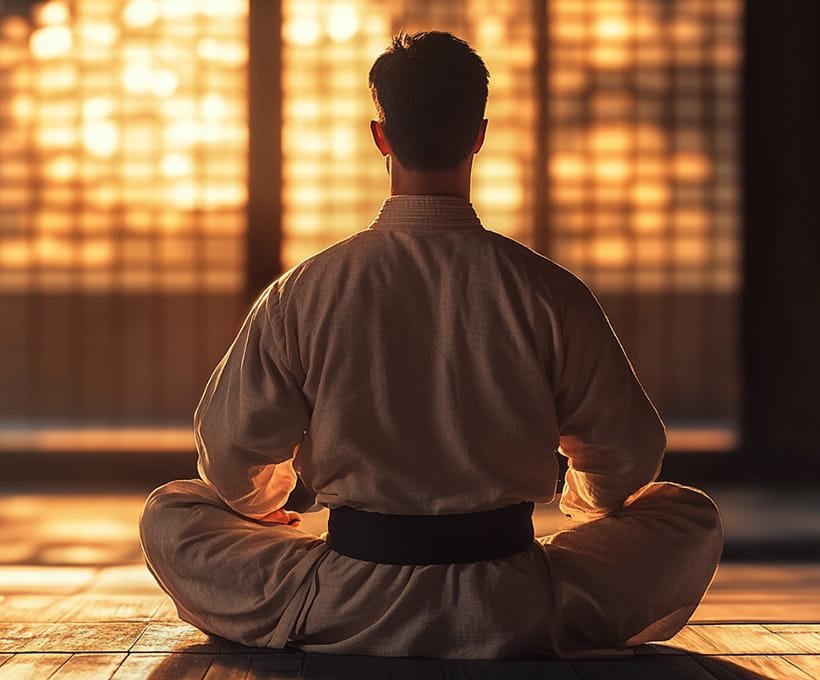
Counting breaths is a simple focusing technique used in martial arts and relaxation training. By creating a slow, steady rhythm, breathing becomes an anchor for attention. This helps coordinate mind and body, allowing relaxation to develop naturally.
Your brain does not simply turn off when you go to bed. It continues processing information, organizing memories, and responding to concerns that may have accumulated throughout the day.
Think of the brain as an ongoing computer. It may replay files that need attention: unfinished work, financial concerns, personal worries, or tomorrow’s challenges.
You may find yourself thinking:
I need to get to sleep. I have a big day tomorrow. Will I be ready for that important meeting?
The more attention you give these thoughts, the more active your brain becomes. The goal is not to force your mind to stop working. Instead, you learn to guide your attention toward a pattern that supports relaxation and sleep.
For generations, people have used repetitive activities to help settle the mind. Counting sheep is one familiar example. Counting breaths follows the same principle but adds the benefit of controlled breathing and focused attention.
A slow, rhythmic, mechanical pattern gives the brain something simple to follow. This type of focus can reduce mental activity and help create the conditions for sleep.
This same principle is used throughout Relaxation Therapy and other Mulry Method practices that develop self-regulation.
Rhythm has a powerful effect on the nervous system. Slow breathing, ocean sounds, gentle rainfall, counting numbers, and other repetitive patterns can all create a calming effect.
Counting breaths combines rhythm with focus. Instead of following worries or random thoughts, your attention follows the natural cycle of breathing.
Begin with Deep Rhythmic Breathing. Inhale slowly through your nose, then exhale gradually through your mouth.
A common pattern is a four-count inhale followed by an eight-count exhale, but the exact timing can vary. The important point is that the exhalation is slow and comfortable.
Slow breathing supports relaxation by engaging the body’s natural calming systems, including pathways associated with the vagus nerve. This mind-body connection is also explained through Polyvagal Theory.
Inhale through your nose and allow your stomach to expand naturally. This allows the diaphragm to move downward and creates a fuller, more relaxed breath.
Then slowly exhale and allow your body to soften.
As you breathe, place your attention on the process:
One breath.
Then another.
Count each breath without trying to force relaxation.
The goal is not to make sleep happen. The goal is to practice the skill of focusing while allowing relaxation to develop.
Counting breaths helps bring mind and body into alignment.
It can:
The skill develops through practice. You inhale and exhale correctly, then focus your attention on breathing.
Many people find that counting up to ten breaths is enough. If you reach ten and remain awake, simply begin again. There is no need to judge the process or wonder whether it is working.
Do not try to relax. Trying creates effort, and effort creates tension. Instead, allow yourself to follow the breathing rhythm and gradually drift toward sleep.
Remember that you are learning a skill. Like any skill, it requires repetition and practice.
You do not have to worry about whether the technique works. Worry is simply another form of brain activity that can keep you awake.
Proceed quietly and calmly. Allow the process to unfold.
All skills involve developing new patterns in the brain. With practice, counting breaths can become a familiar pathway your brain recognizes as a signal for relaxation and rest.
Sleep is a natural process involving repeating cycles of light sleep, deep sleep, and REM sleep. Each stage plays an important role in physical restoration, memory, and emotional balance.
A consistent sleep routine and effective relaxation skills can help support healthier sleep patterns.
Relaxation is not something you force. It is something you learn.
Many people carry the tensions of the day into the night. Thoughts, emotions, and physical stress can make it difficult for the body and mind to settle.
Developing relaxation skills provides a natural way to respond to these challenges.
Counting breaths is one example of how focused attention and breathing can work together. Through practice, you learn to shift from mental activity toward a calmer state.
Counting breaths combines the principles of martial arts focus with relaxation training. The practice is simple, but the skill behind it is valuable.
You are learning to direct attention, regulate breathing, and create balance between mind and body.
Like any skill, it takes practice. Over time, this simple breathing technique can become a reliable tool for relaxation, focus, and restorative sleep.
